Question Library

Browse, filter, and study verified past examination questions with step-by-step mathematical reasoning.

Launch Interactive Practice
Searching 18,000+ Questions... Sifting topics, KaTeX formulas & verified solutions
Showing 24796–24810 of 29821 verified questions
Sort by:
Chemistry UTME / JAMB 1991 Nature of Matter & Separation Techniques
A certain liquid has a high boiling point. It is viscous, non-toxic, miscible with water being very hygroscopic. This liquid is most likely to be?
A
CH3CH2CH2HO
B
CH3CHOHCH3
C
CH3CH2CHOHCH3
D
CH2OHCHOHCH2OH
medium Difficulty
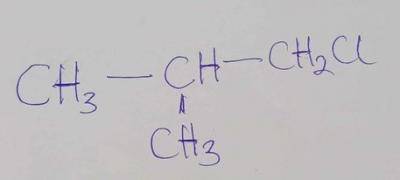
Chemistry UTME / JAMB 1991 Organic Chemistry I: Hydrocarbons & Crude Oil
Is known as?
Attached Figure / Diagram
Question diagram
A
1-chloro-2-methylbutane
B
1-chloro-2-methylpropane
C
2-chloromethylpropane
D
1-chloro-2, 2-dimethylethane
medium Difficulty
Chemistry UTME / JAMB 1991 Organic Chemistry II: Functional Groups, Polymers & Biomolecules
Which of the following statements is TRUE of the complete hydrolysis of a glycerine by sodium hygroxide?
A
3 moles ofNaOH are required for each mole of glyceride
B
3 moles of glycerol are produced
C
Only one mole of soap is formed
D
concentrated H2SO4 is essential for the completion of the reaction
medium Difficulty
Chemistry UTME / JAMB 1991 Stoichiometry, Mole Concept & Volumetric Analysis
Which of the following are the products of the reaction between CH3COOH and CI2 in sunlight?
A
CICH2COOH + HCI
B
CH3COCI + HOCI
C
CH3COOCI + HCI
D
CH3COCI + HO2
medium Difficulty
Chemistry UTME / JAMB 1991 Acids, Bases, pH & Salts
Which of these is an acid salt?
A
K2SO4-.AI2(SO4)3.24H2O
B
CuCO3.Cu(OH)2
C
NaHS
D
CaOCI2-
medium Difficulty
Chemistry UTME / JAMB 1991 Acids, Bases, pH & Salts
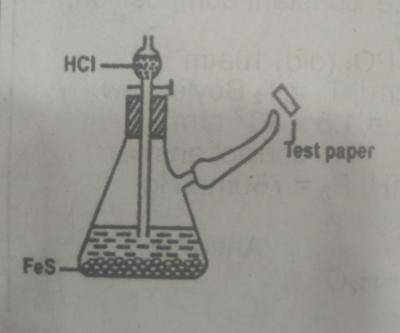
The appropriate test paper to use in the above experiment is moist
A
litmus psper
B
potassium heptaoxodichromate (IV) paper
C
lead (ll) trioxonitrate (V) paper
D
universal indicator paper
medium Difficulty
Chemistry UTME / JAMB 1991 Chemical Bonding & Intermolecular Forces
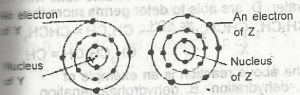
The electrons of two atoms Y and Z are arranged in shells as shown above. The bond formed between the atoms of Y and Z is
Attached Figure / Diagram
Question diagram
A
ionic
B
covalent
C
dative
D
metallic
medium Difficulty
Chemistry UTME / JAMB 1991 Non-Metals & Their Compounds
50 cm3 of sulphur (lV) oxide, 800 cm3 of carbon (IV) oxide will respectively saturate 1.0cm3 of water at 15oC. Which of the following is suitable for demonstrating the fountain experiment?
Attached Figure / Diagram
Question diagram
A
Sulphur (IV) oxide and hydrogen chloride.
B
Carbon (IV) oxide and ammonia
C
Ammonia and hydrogen chloride
D
Carbon (IV) oxide and Sulphur (IV) oxide
medium Difficulty
Chemistry UTME / JAMB 1991 Reaction Rates & Chemical Equilibrium
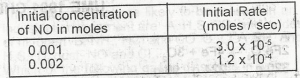
The data in the table above shows the rate of reaction of nitrogen (ll) oxide with chlorine at 25oC It can be concluded that doubling the initial concentration of NO increase the rate of reaction by a factor of
Attached Figure / Diagram
Question diagram
A
two
B
three
C
four
D
five
medium Difficulty
Chemistry UTME / JAMB 1991 Acids, Bases, pH & Salts
The appropriate test paper to use in the above experiment is moist
Attached Figure / Diagram
Question diagram
A
litmus psper
B
potassium heptaoxodichromate (IV) paper
C
lead (ll) trioxonitrate (V) paper
D
universal indicator paper
medium Difficulty
Chemistry WAEC / WASSCE 1991 Metals, Transition Elements & Extraction
The metal extracted from cassiterite is
A
calcium
B
copper
C
tin
D
sodium
E
lead
medium Difficulty
Chemistry WAEC / WASSCE 1991 Oxidation, Reduction & Redox Reactions
In which of the following is the oxidation number of nitrogen zero?
A
SO2 and NH3
B
NaNO3
C
HNO2
D
NOI3
E
N2
medium Difficulty
Chemistry WAEC / WASSCE 1991 Water, Solutions & Solubility
The separation of a mixture of calcium trioxocarbonate (lV) and sodium trioxocarbonate (IV) is most easily carried out by using the differences in their
A
physical states
B
melting points
C
Rf. values
D
solubility
E
boiling points
medium Difficulty
Chemistry WAEC / WASSCE 1991 Periodic Table & Periodicity
When air is passed through a heated tube containing finely divided copper, the component that is absorbed in the process is
A
carbon (IV) oxide
B
nitrogen
C
oxygen
D
water vapour
E
noble gases
medium Difficulty
Chemistry WAEC / WASSCE 1991 Stoichiometry, Mole Concept & Volumetric Analysis
What is the amount (in mole) of sodium trioxocarbonate (IV) in 5.3 g of the compound? (Na2CO3 = 106)
A
0.05
B
0.10
C
0.20
D
0.50
E
2.00
medium Difficulty
Page 1654 of 1989