Question Library

Browse, filter, and study verified past examination questions with step-by-step mathematical reasoning.

Launch Interactive Practice
Searching 18,000+ Questions... Sifting topics, KaTeX formulas & verified solutions
Showing 22426–22440 of 29821 verified questions
Sort by:
Biology WAEC / WASSCE 1995 Basic Ecological Concepts, Ecosystems & Biomes
Very low annual rainfall, sparse vegetation, high day temperatures and cold nights are the characteristics of the biome known as
A
swamp
B
tropical forest
C
southern guinea savanna
D
afro alpine
E
desert
medium Difficulty
Biology WAEC / WASSCE 1995 Nutrition in Plants & Animals (Photosynthesis & Food Substances)
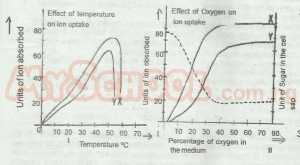
Which of the following conclusions cannot be drawn from the graphs?
Attached Figure / Diagram
Question diagram
A
Ion is taken up more rapidly at suitable temperature
B
Suitable oxygen concentration increases ion uptake
C
Ion uptake requires energy from aerobic respiration of sugar
D
Ion uptake occurs most rapidly in adequate supply of, respiratory substrate
E
The quantity of ions absorbed is inversely proportional to the quantity of carbohydrate (sugar) synthesized.
medium Difficulty
Biology WAEC / WASSCE 1995 Variety of Organisms & Classification of Living Things
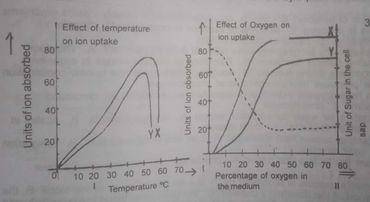
The graphs above show the results of experiments which investigated the effect of temperature and oxygen on the rate of uptake of certain ions labelled X and Y by a plant root. Use them to answer the question Which of the temperature ranges will likely favour the plant best?
Attached Figure / Diagram
Question diagram
A
0 -10oC
B
15.-20oC
C
30- 40oC
D
45 - 50oC
E
above 50oC
medium Difficulty
Biology WAEC / WASSCE 1995 Variety of Organisms & Classification of Living Things
Which of the following is the correct chain for the organism found in an aquatic community?
A
Paramecium, Phytoplankton, Prawn, Waterflea, Tilapia, Shark
B
Waterflea, Paramecium, Phytoplankton, Prawn, Tilapia, Shark
C
Phytoplankton, Waterflea, Paramecium, Prawn, Shark, `tilapia
D
Phytoplankton, Paramecium, Waterflea, Prawn, Tilapia, Shark
E
Paramecium, Phytoplankton, Waterfiea, Prawn, Shark, Tilapia
medium Difficulty
Biology WAEC / WASSCE 1995 Nutrition in Plants & Animals (Photosynthesis & Food Substances)
Which of the following is not an effect of over-crowding on a population?
A
Death
B
Competition
C
Commensalism
D
Aggression
E
Cannibalism
medium Difficulty
Biology WAEC / WASSCE 1995 Growth, Micro-organisms & Public Health
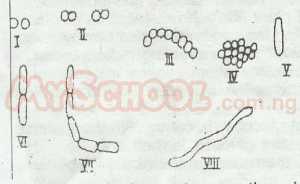
The diagram above represent the shape of major group of bacteria The groups staphylococci and streptobacilli are represented by
Attached Figure / Diagram
Question diagram
A
I and II
B
II and IV
C
III and VII
D
IV and VII
E
IV and VIII
medium Difficulty
Biology WAEC / WASSCE 1995 Population Ecology, Habitats & Conservation
Prevention of erosion could best be carried out by
A
crop rotation and mulching
B
contouring of slopping ground and afforestation
C
grazing terracing and shifting cultivation
D
strip cropping and poaching
E
bush fallowing and crop rotation.
medium Difficulty
Biology WAEC / WASSCE 1995 Variety of Organisms & Classification of Living Things
The following are useful measures for conserving forest except
A
preventing and controlling accidental forest fire
B
encouraging the use of charcoal for industrial and domestic purposes
C
combating and preventing plant diseases
D
reafforestation of depleted forest
E
protection of young growing trees
medium Difficulty
Biology WAEC / WASSCE 1995 Population Ecology, Habitats & Conservation
The following practices are aimed at soil conservation except
A
contour ridging
B
application of manures
C
strip cropping
D
bush clearing
E
crop rotation
medium Difficulty
Biology WAEC / WASSCE 1995 Nutrition in Plants & Animals (Photosynthesis & Food Substances)
Which of the following natural resources is most readily available to all organisms?
A
Water
B
Oil
C
Food
D
Air
E
Mineral salts
medium Difficulty
Biology WAEC / WASSCE 1995 Variation & Genetics (Heredity)
Which of the following is an example of discontinuous variation?
A
Height
B
Size of head
C
Blood group
D
Skin colour
E
Length of foot
medium Difficulty
Biology WAEC / WASSCE 1995 Variety of Organisms & Classification of Living Things
Hereditary variation is best described as
A
characters transmitted from generation to generation
B
traits acquired from diseases
C
characters that show up due to social conditions
D
traits acquired from habits and environmental conditions
E
characters that result from physical injuries.
medium Difficulty
Biology WAEC / WASSCE 1995 Variation & Genetics (Heredity)
An individual with blood group AB can receive blood from those in blood group(s)
A
AB only B
B
A and B only
C
B only
D
AB and O only
E
A, B, AB and O
medium Difficulty
Biology WAEC / WASSCE 1995 Adaptation & Evolution
The statement that the environment determines which organisms survives to reproduce
A
explains the theory of acquired characters
B
supports Jean Lamarck’s theory of use and disuse
C
supports the idea of survival of the fittest
D
is refuted by fossil records
E
implies that organisms modify their environment in order to survive.
medium Difficulty
Biology WAEC / WASSCE 1995 Variation & Genetics (Heredity)
Which of the following is a definition of heredity? It is the
A
non-resemblance of closely related organisms
B
total absence of parental traits in offspring
C
absence of variation in organisms
D
transfer of characteristics from parents to offspring
E
cause of infant mortality.
medium Difficulty
Page 1496 of 1989