Question Library

Browse, filter, and study verified past examination questions with step-by-step mathematical reasoning.
Launch Interactive Practice
Searching 18,000+ Questions... Sifting topics, KaTeX formulas & verified solutions
Showing 22411–22425 of 29821 verified questions
Sort by:
Biology WAEC / WASSCE 1995 Respiration & Gaseous Exchange
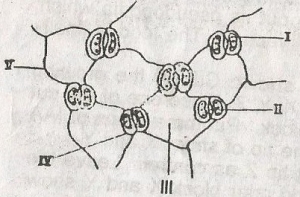
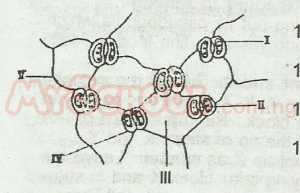
The part labelled ll is the
Attached Figure / Diagram
Question diagram
A
stoma
B
palisade cell
C
spongy cell
D
guard cell
E
epidermal cell.
medium Difficulty
Biology WAEC / WASSCE 1995 Variety of Organisms & Classification of Living Things
The structure that will be stained blue-black by iodine is labelled
Attached Figure / Diagram
Question diagram
A
I
B
II
C
III
D
IV
E
V
medium Difficulty
Biology WAEC / WASSCE 1995 Respiration & Gaseous Exchange
In the anaerobic stage of respiration, the net ATP molecules produced per glucose molecule
A
one
B
two
C
three
D
four
E
five
medium Difficulty
Biology WAEC / WASSCE 1995 Excretion & Homeostasis
Reabsorption of the metabolic products along the kidney tubules is made possible by the
A
closeness of the intestine to the kidney
B
convoluted nature of the tubules
C
presence of convoluted tubules in the medulla
D
presence of network of capillaries around the convoluted tubules
E
joining of the main collecting tubules to the kidney tubules
medium Difficulty
Biology WAEC / WASSCE 1995 Variety of Organisms & Classification of Living Things
Which of the following organisms has a symbiotic relationship with green algae?
A
Amoeba
B
Paramecium
C
Hydra
D
Euglena
E
Chlamydomonas
medium Difficulty
Biology WAEC / WASSCE 1995 Nutrition in Plants & Animals (Photosynthesis & Food Substances)
At the end of photosynthesis, the green leaf is tested for starch and not glucose, because
A
the glucose is used up immediately to provide energy for the needs of the leaf
B
the glucose formed is immediately converted to starch
C
starch is stored only in leaves
D
there are no chemicals for glucose test in leaves
E
it is easy to test for starch
medium Difficulty
Biology WAEC / WASSCE 1995 Nutrition in Plants & Animals (Photosynthesis & Food Substances)
Which of these processes removes carbon from the atmosphere?
A
Putrefaction of animals
B
Burning of fuels
C
Photosynthesis
D
Volcanic eruption
E
Respiration in plants
medium Difficulty
Biology WAEC / WASSCE 1995 Nutrition in Plants & Animals (Photosynthesis & Food Substances)
Which of the following conditions is not necessary for photosynthesis to occur in plants?
A
There must be light
B
There must be xylem tissue used to conduct water
C
There must be chlorophyll to trap radiant energy
D
Carbondioxide must be present
E
Water must be present
medium Difficulty
Biology WAEC / WASSCE 1995 Basic Ecological Concepts, Ecosystems & Biomes
The distribution of organisms in a fresh - water habitat like a stream or pond is determined by the following except
A
rainfall
B
temperature
C
pH of soil
D
light penetration
E
tidal movements
medium Difficulty
Biology WAEC / WASSCE 1995 Basic Ecological Concepts, Ecosystems & Biomes
In a food chain the position occupied by an organism is called
A
the trophic level
B
energy level
C
the feeding level
D
the habitat level
E
niche
medium Difficulty
Biology WAEC / WASSCE 1995 Basic Ecological Concepts, Ecosystems & Biomes
Which of these statements about food chain is not correct?
A
Animals in the chain are consumers
B
A food chain usually begins with a green plant
C
All organisms in a food chain are animals
D
Living things are dependent on one another
E
The food chain involves energy transfer in an ecosystem
medium Difficulty
Biology WAEC / WASSCE 1995 Transport System in Plants & Animals
Which of these is not applicable to the circulation of water- in nature?
A
Water removed from oceans are Permanently lost
B
Water constantly evaporates from the seas, rivers, lakes and soil
C
Water vapour rises. cools, condenses and precipitates as rain and dew
D
Water is absorbed by plants and animals from their external environment
E
Plants lose water by transpiration and decay
medium Difficulty
Biology WAEC / WASSCE 1995 Nutrition in Plants & Animals (Photosynthesis & Food Substances)
An association between two organisms in which both benefit is called
A
parasitism
B
commensalism
C
symbiosis
D
Predation
E
competition
medium Difficulty
Biology WAEC / WASSCE 1995 Population Ecology, Habitats & Conservation
Which of the following is not an outcome of ecological succession?
A
There is a progressive change in species structure, organic matter and energy flow
B
The climax stage consists of a comparatively long lasting species composition
C
There is no dynamic equilibrium between the community and habitat in the climax stage
D
Communities occurring later in the sequence of succession are more complex
E
There are fewer dominant species in the late stages of succession.
medium Difficulty
Biology WAEC / WASSCE 1995 Population Ecology, Habitats & Conservation
Which of the following is characteristics of a swamp?
A
Vegetation with stratified arrangement
B
mesophytes with broad leaves
C
The ground is flooded most of the time
D
Predominance of climbing plants
E
Many plants with tire resistant structures
medium Difficulty
Page 1495 of 1989