Question Library

Browse, filter, and study verified past examination questions with step-by-step mathematical reasoning.

Launch Interactive Practice
Searching 18,000+ Questions... Sifting topics, KaTeX formulas & verified solutions
Showing 20866–20880 of 29821 verified questions
Sort by:
Biology WAEC / WASSCE 1998 Variation & Genetics (Heredity)
How many chromosomes will be present in a gamete if the somatic cell has eight(8) chromosomes?
A
4
B
6
C
8
D
10
E
16
medium Difficulty
Biology WAEC / WASSCE 1998 Reproduction in Plants & Animals
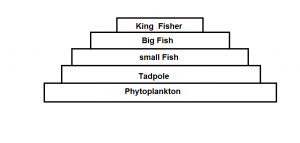
Which of these organisms is a herbivore?
Attached Figure / Diagram
Question diagram
A
Tadpole
B
Phytoplankton
C
King Fisher
D
Small fish
E
Big fish
medium Difficulty
Biology WAEC / WASSCE 1998 Basic Ecological Concepts, Ecosystems & Biomes
The presence of stilt and breathing roots are features of plants found in the
A
tropical rain forests
B
fresh water swamp forests
C
mangrove forests
D
southern guinea savanna
E
northern guinea savanna.
medium Difficulty
Biology WAEC / WASSCE 1998 Supporting Tissues & Skeletal System
Excessive loss of water from the leaf is prevented by the
A
vascular bundle
B
cuticle
C
midrib
D
parenchyma
E
mesophyll.
medium Difficulty
Biology WAEC / WASSCE 1998 Reproduction in Plants & Animals
Which of the following organisms will be a colonizing species of a heap of moist sub soil?
A
Green algae
B
Ferns
C
White mangrove
D
Snails
E
Tadpole
medium Difficulty
Biology WAEC / WASSCE 1998 Variety of Organisms & Classification of Living Things
The earthworm is important because
A
its body is always moist
B
each of its segments has chaetae
C
It has a clitellum
D
it aerates the soil
E
it reproduces fast
medium Difficulty
Biology WAEC / WASSCE 1998 Variation & Genetics (Heredity)
In a plant of genotype Tt, what is the probability that a gamete will contain gene t?
A
1\2
B
3\4
C
1\8
D
1\6
E
1\4
medium Difficulty
Biology WAEC / WASSCE 1998 Variation & Genetics (Heredity)
In a cross involving a heterozygous red flowered plant (Rr) and a white flowered plant (rr). what is the probability that the offspring will be Rr?
A
1
B
1\2
C
1\4
D
3\4
E
2
medium Difficulty
Biology WAEC / WASSCE 1998 Adaptation & Evolution
Termites are called social insects because
A
the nests are built by the nasute soldiers
B
they live together in communities
C
the queen allocates duties to the workers
D
the king and queen do mate
E
the function of the workers and soldiers are very important
medium Difficulty
Biology WAEC / WASSCE 1998 Adaptation & Evolution
Which off the following makes up the bee caste?
A
Soldiers and Queen
B
Drones, soldiers and workers
C
Queen, workers and soldiers
D
Queen, drones and workers
E
Soldiers, Queen and drones
medium Difficulty
Biology WAEC / WASSCE 1998 Reproduction in Plants & Animals
Which of the following examples best describes camouflagic colouration in organisms?
A
A butterfly which has a real colouration on the wing
B
A green snake in a green grass
C
zebra with vertical stripes on the body
D
Certain tree frogs with bright colour patterns
E
A flower whose petals and sepals are of the same colou
medium Difficulty
Biology UTME / JAMB 1998 Adaptation & Evolution
In the whistling pine, leaves are reduced to brown scales and young stems are green. This is an adaptation for
A
obtaining food
B
conserving nutrients
C
storing water
D
reducing transpiration
medium Difficulty
Biology WAEC / WASSCE 1998 Reproduction in Plants & Animals
1.State two Structural differences between the nymph of cockroach and an adult cockroach. 2. List three characteristic features of cross-pollinated flowers. 3. Give a reason why the testes in most mammals are located outside the body cavity 4. State the structure used by each of the following organism for movement: (a) Ameba (b) Euglena (c) Paramecium. 5. List three types of stimuli detected by the sensory nerve endings on the skin. 6. Explain the function of the ciliary muscles of the eye. 7. How many "daughter" cells are produced in (a) meiosis (b) mitosis? 8. The graphs show the limit of tolerance of some species of fish I, Il and lll to water temperature. (a) From the graphs, what can you deduce about the geographical range of species i and ili? (b) What is the optimal temperature for growth of species I, Il and IIl? 9. Name three abiotic factors which plants growing close to each other may compete for? 10. Name four excretory products of plants. 11. (a) (i) identify specimens A, B,C and D without reasons. (ii) To which class of animals do specimens B and C belong? (ii) State the excretory structures possessed by each of specimens B and D. (b) State two external features used by specimen C for gaseous exchange. (c) Mention (i) three structural similarities (i) two structural differences between specimens B and C (d) Make a labeled drawing 8-10 cm long of the ventral view of specimen A. 12. (a) identify specimen E without reasons. (b) Make a labeled drawing 8-10cm long of the cut surface of specimen E. 13.(a) identity specimens F, GH, I, J and K without reasons. (b) Copy and complete the table below into your answer booklet Put a tick ( ✓ ) where appropriate SPECIMEN ANNUAL PERENNIAL CASH CROP FOOD CROP F G H I J K
medium Difficulty
Biology WAEC / WASSCE 1998 Nutrition in Plants & Animals (Photosynthesis & Food Substances)
(a) (i) Name the two stages involved in photosynthesis. (ii) Write an equation to represent the first stage of photosynthesis. (b) (i) List six modes of nutrition in organisms. (ii) Name one feature that makes feeding possible in the following organisms: I. Paramecium; II Spirogyra; Ill Rhizopus; IV Tape worm. (c) Define the term balanced diet. (d) (i) State three characteristics of enzymes. (ii) in a tabular form, indicate the source, substrate acted upon and the product of the following enzymes: ptyalin and pepsin.
medium Difficulty
Biology WAEC / WASSCE 1998 Nervous, Hormonal Coordination & Sense Organs
(a) List four floral parts of a flower. (b) (i) In a tabular form, state five differences between wind and insect pollinated flowers. (ii) Give one example of each. (c) (i) State three agents of fruit and seed dispersal. (ii) Give an example of fruits or seeds dispersed by each agent (d) (i) Define the term "hormones. (ii) Name one plant hormone. (iii) State two effects of plant hormones.
medium Difficulty
Page 1392 of 1989