Question Library
Browse, filter, and study verified past examination questions with step-by-step mathematical reasoning.
Searching 18,000+ Questions...
Sifting topics, KaTeX formulas & verified solutions
Showing 106–120 of 4783 verified questions
Sort by:
Chemistry
UTME / JAMB 2025
Matter & Separation Techniques
Solution
The fractions of crude oil are best separated by
A
steam distillation
B
fractional crystallization
C
precipitation
D
fractional distillation
medium Difficulty
Verified Correct Answer: Option D
Chemical Principles & Mechanism
The fractions of crude oil are best separated by fractional distillation because the different hydrocarbons have different boiling points.
In this process, Crude oil is heated and vaporized. The vapour rises through a tall fractionating column which is hot at the bottom and cooler at the top.However, different fractions condense at different temperature levels (heights) in the column and are collected separately. Then, lighter fractions with lower boiling points condense at the top, while heavier fractions with higher boiling points condense at the bottom.
Source: Myschool Past Questions Archive (Record #74291)
Chemistry
UTME / JAMB 2025
Stoichiometry & Mole Concept
Diagram
Solution
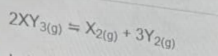
In the equation above, the expression for the equilibrium constant, k\(_c\) is
Attached Figure / Diagram
A
\(\frac{[2XY_3]}{[X_2][3Y_2]}\)
B
\(\frac{[X_2][3Y_2]}{2XY_3]}\)
C
\(\frac{[XY_3]^2}{[X_2][Y_2]}\)
D
\(\frac{[X_2][Y_2]^3}{[XY_3]^2}\)
medium Difficulty
Verified Correct Answer: Option D
Chemical Principles & Mechanism
The equilibrium constant expression, based on the law of mass action, is defined as the ratio of the concentrations of the products raised to their stoichiometric coefficients to the concentrations of the reactants raised to their stoichiometric coefficients.
The correct answer is option D - \(\frac{[X_2][Y_2]^3}{[XY_3]^2}\)
Source: Myschool Past Questions Archive (Record #74296)
Chemistry
UTME / JAMB 2025
Stoichiometry & Mole Concept
Solution
How many molecules are there in 4.0 moles of glucose?
[Avogadro's number = 6.02 x 10\(^{23}\)]
A
1.51 x 10\(^{23}\)
B
2.41 x 10\(^{24}\)
C
24.08 x 10\(^{24}\)
D
1.51 x 10\(^{24}\)
medium Difficulty
Verified Correct Answer: Option B
Chemical Principles & Mechanism
Given:
Number of moles, n = 4.0 moles
Avogadro's number, L = 6.02 x 10\(^{23}\)
Number of molecules, N = ?
To find the number of molecules, you need to first identify the formula that combines or form a relationship among the three parameters above.
Number of moles, n = \(\frac{Number of molecules}{Avogadro number}\)
n = \(\frac{N}{L}\)
N = n x L
= 4 X 6.02 x 10\(^{23}\)
= 24.08 x 10\(^{23}\)
= 2.408 x 10\(^{24}\)
The correct answer is option B - 2.41 x 10\(^{24}\)
Source: Myschool Past Questions Archive (Record #74389)
Chemistry
UTME / JAMB 2025
Acids, Bases, and Salts
Solution
What is the product obtained at the anode in the electrolysis of concentrated sodium chloride using graphite electrode?
A
Chlorine gas
B
oxygen gas
C
water vapour
D
hydrogen gas
medium Difficulty
Verified Correct Answer: Option A
Chemical Principles & Mechanism
In the electrolysis of a concentrated sodium chloride solution (brine) using inert graphite electrodes, both chloride ions (Cl\(^-\)) and hydroxide ions (OH\(^−\)) (from the water) are attracted to the positive anode. Although, based on standard electrode potentials, the oxidation of hydroxide ions to oxygen gas should be preferred, the high concentration of chloride ions and the overpotential for oxygen evolution means that chloride ions are preferentially discharged to produce chlorine gas (Cl\(_2\)) at the anode.
The reaction is : 2Cl\(^-\) → Cl\(_2\) + 2e\(^-\)
The correct option is A. Chlorine gas.
Source: Myschool Past Questions Archive (Record #74390)
Chemistry
UTME / JAMB 2025
Acids, Bases, and Salts
Solution
Freons pollution in the air are released from
A
fossil fuel
B
aerosol can
C
photosynthesis
D
organic decay
medium Difficulty
Verified Correct Answer: Option B
Chemical Principles & Mechanism
Freons, also known as chlorofluorocarbons (CFCs) and hydrofluorocarbons (HCFCs), are man-made chemicals that were widely used as refrigerants and propellants in aerosol applications. They are released into the air from various human-made sources, including aerosol cans. Once in the atmosphere, these stable compounds eventually reach the stratosphere, where powerful UV radiation breaks them down, releasing chlorine atoms that deplete the ozone layer.
A. fossil fuel: Burning fossil fuels releases pollutants like carbon dioxide, sulphur dioxide, and nitrogen oxides, but is not a source of freon emissions.
C. photosynthesis: Photosynthesis is a natural process used by plants to remove carbon dioxide from the atmosphere and release oxygen; it is not a source of freon pollution.
D. organic decay: The bacterial breakdown of organic matter typically produces gases such as methane and hydrogen sulfide, not freons.
Source: Myschool Past Questions Archive (Record #74391)
Chemistry
UTME / JAMB 2025
Matter & Separation Techniques
Solution
In welding and cutting of metals, the organic gas commonly used in the heating process is
A
methane
B
propene
C
butane
D
ethyne
medium Difficulty
Verified Correct Answer: Option D
Chemical Principles & Mechanism
Ethyne, commonly known as acetylene (C\(_2\)H\(_2\)), is the most widely used organic fuel gas in oxy-fuel welding and cutting. Ethyne is the only fuel gas generally suitable for welding steel.
When combined with oxygen, ethyne produces the hottest flame among common fuel gases, reaching temperatures between 3,200 to 3,500 degrees Celsius. This high temperature is necessary to melt steel and other ferrous metals for welding and to rapidly preheat the metal to its kindling temperature for cutting.
Source: Myschool Past Questions Archive (Record #74392)
Chemistry
UTME / JAMB 2025
Matter & Separation Techniques
Solution
Bronze is used in making
A
musical instruments and ornaments
B
coins and medals
C
electromagnets and cutlery
D
aircrafts and ship
medium Difficulty
Verified Correct Answer: Option A
Chemical Principles & Mechanism
Bronze is widely used for making musical instruments, particularly percussion instruments like cymbals, bells, and gongs, due to its excellent acoustic properties and durability. It is also used for the windings of strings on pianos and guitars.
B. coins and medals: Bronze is indeed used for coins and medals, but it is also widely used for musical instruments and ornaments/sculptures, making option A and B both viable. However, some sources group musical instruments and ornaments together as a primary use case.
C. electromagnets and cutlery: Electromagnets typically use copper wire, not bronze. Cutlery is generally made from stainless steel or silver, not bronze.
D. aircrafts and ship: Aluminum and its alloys are the primary materials for aircraft construction due to their lightweight properties. While bronze is used in certain marine applications like ship propellers and fittings due to its corrosion resistance, it is not the main material for the entire ship structure, and it is not a primary material for aircrafts.
Source: Myschool Past Questions Archive (Record #74393)
Chemistry
UTME / JAMB 2025
Stoichiometry & Mole Concept
Solution
Find the hydrogen ion, H\(^+\) concentration and hydroxide ion, OH\(^-\) concentration in 0.06 moldm\(^{-3}\) solution of H\(_2\)SO\(_4\).
A
1.2 x 10\(^{-2}\) ; 8.3 x 10\(^{-13}\)
B
1.2 x 10\(^{-1}\) ; 8.3 x 10\(^{-13}\)
C
1.2 x 10\(^{-1}\) ; 8.3 x 10\(^{-14}\)
D
1.2 x 10\(^{-2}\) ; 8.3 x 10\(^{-14}\)
medium Difficulty
Verified Correct Answer: Option C
Chemical Principles & Mechanism
Sulphuric acid (H\(_2\)SO\(_4\)) is a strong acid that fully dissociates in water, yielding two moles of hydrogen ions (H\(^+\)) for every one mole of acid, especially in dilute solutions.
[ H\(^+\) ] = 2 X [H\(_2\)SO\(_4\)]
= 2 X 0.06
[ H\(^+\) ] = 0.12 = 1.2 X 10\(^{-1}\) moldm\(^{-3}\)
To get the [OH\(^-\)], recall that the product of the hydrogen ion concentration, [H+] and the hydroxide ion concentration ([OH−]) in an aqueous solution at standard temperature is a constant, known as the ion product of water (Kw), which is approximately1.0 x10\(^{-14}\)mol\(^2\)/dm\(^6\).
K\(_w\) = [ H\(^+\) ] [OH\(^-\)]
[OH\(^-\)] = \(\frac{K_w}{[H^+]}\)
= \(\frac{1.0 x10^{-14}}{0.12}\)
[OH\(^-\)] = 8.33 x 10\(^{-14}\)
Source: Myschool Past Questions Archive (Record #74394)
Chemistry
UTME / JAMB 2025
Acids, Bases, and Salts
Solution
After breathing in a test tube that contains acidified K\(_2\)Cr\(_2\)O\(_7\), a man noticed a change in the colour of the acidified K\(_2\)Cr\(_2\)O\(_7\) from orange to green. This suggests the presence of
A
alkanoic acid
B
alkanal
C
alkanol
D
alkanone
medium Difficulty
Verified Correct Answer: Option C
Chemical Principles & Mechanism
The test is commonly used in breathalyzers to detect alcohol consumption, where the orange-to-green change confirms the presence of alcohol.
The colour change of acidified K\(_2\)Cr\(_2\)O\(_7\)from orange to green upon breathing into a test tube indicates the presence of an alkanol (specifically ethanol). The ethanol is oxidized to ethanal/acetic acid while the dichromate ions (Cr\(_2\)O\(_7\)\(^{2−}\)) are reduced to green chromium(III) ions (Cr\(^{3+}\)).
Source: Myschool Past Questions Archive (Record #74395)
Chemistry
UTME / JAMB 2025
Atomic Structure and Periodic Table
Solution
The 5\(^{th}\) member of an alkyne series is
A
C\(_5\)H\(_8\)
B
C\(_5\)H\(_{10}\)
C
C\(_6\)H\(_{12}\)
D
C\(_6\)H\(_{10}\)
medium Difficulty
Verified Correct Answer: Option D
Chemical Principles & Mechanism
The general formula for the alkyne homologous series is C\(_n\)H\(_{2n−2}\), where n is the number of carbon atoms. The first member of the series has n=2 (ethyne), as a minimum of two carbon atoms is required for a triple bond.
The 5th member of the alkyne series is hexyne (C\(_6\)H\(_{10}\)).
Source: Myschool Past Questions Archive (Record #74882)
Chemistry
WAEC / WASSCE 2025
Stoichiometry & Mole Concept
Solution
Which of the following pairs of gases cannot be collected by downward delivery?
A
SO\(_2\) and NH\(_3\)
B
CO and N\(_2\)
C
Cl\(_2\) and N\(_2\)
D
SO\(_2\) and N\(_2\)
medium Difficulty
Verified Correct Answer: Option B
Chemical Principles & Mechanism
Downward delivery (also known as upward displacement of air) is a method used to collect gases that are denser than air. Air has an average relative molecular mass of approximately 29.
CO (Carbon Monoxide) has a molecular mass of 28, making it slightly lighter than air. N\(_2\) (Nitrogen) has a molecular mass of 28, making it slightly lighter than air.
Because both gases in this pair are lighter than air, they will rise rather than settle at the bottom of a gas jar, meaning they cannot be collected by downward delivery.
Source: Myschool Past Questions Archive (Record #76996)
Chemistry
WAEC / WASSCE 2025
Atomic Structure and Periodic Table
Solution
Nickel is used in the hydrogenation of alkenes because it
A
Increases the yield of the product
B
lowers the activation energy of the reaction
C
makes the reaction more exothermic
D
prevents a reverse reaction from occuring
medium Difficulty
Verified Correct Answer: Option B
Chemical Principles & Mechanism
Nickel acts as a catalyst in the hydrogenation of alkenes. Catalysts function by providing an alternative reaction pathway with a lower activation energy. By lowering the energy barrier, a larger fraction of reactant molecules have sufficient energy to react at a given temperature, which significantly increases the reaction rate. In this specific reaction, nickel adsorbs hydrogen onto its surface, weakening the H-H bonds and facilitating their addition to the alkene.
Source: Myschool Past Questions Archive (Record #76997)
Chemistry
WAEC / WASSCE 2025
Electrochemistry and Redox
Solution
Aluminum is extracted by
A
electrolysis of the purified ore
B
froth floatation of the smelted ore
C
reduction of the ore with coke in a furnace
D
roasting the ore in excess supply of air
medium Difficulty
Verified Correct Answer: Option A
Chemical Principles & Mechanism
Aluminum is a highly reactive metal, placing it high on the reactivity series. Because it forms very stable oxides, it cannot be extracted from its ore (bauxite) using standard chemical reducing agents like carbon or coke. Instead, the industrial extraction process is by electrolysis of the purified ore.
Source: Myschool Past Questions Archive (Record #76998)
Chemistry
WAEC / WASSCE 2025
Matter & Separation Techniques
Solution
Which of the following gases is used in fire extinguishers?
A
Carbon(IV)oxide
B
Nitrogen(IV)oxide
C
Carbon(II)oxide
D
Sulphur(IV)oxide
medium Difficulty
Verified Correct Answer: Option A
Chemical Principles & Mechanism
Carbon(IV)oxide, commonly known as carbon dioxide (CO\(_2\)), is the primary gas used in fire extinguishers because it is non-combustible and denser than air. When released, it displaces the oxygen surrounding the fire, effectively "suffocating" the flames by removing one of the three essential components (fuel, heat, and oxygen) needed for combustion.
Source: Myschool Past Questions Archive (Record #77016)
Chemistry
WAEC / WASSCE 2025
Atomic Structure and Periodic Table
Solution
Both Na\(^+\) and K\(^+\) have
A
tendency to give electrons
B
positive reduction potential
C
tendency to accept electrons
D
negative oxidation potential
medium Difficulty
Verified Correct Answer: Option C
Chemical Principles & Mechanism
Sodium (Na\(^+\)) and potassium (K\(^+\)) are cations, meaning they have already lost an electron to achieve a stable noble gas configuration. Because they are positively charged, they have a tendency to accept electrons to return to their neutral elemental state (Na or K), a process called reduction.
Conversely, option A, which is the tendency to give electrons describes the neutral atoms (Na and K) which are strong reducing agents that readily lose their single valence electron. Once they become Na\(^+\) and K\(^+\) ions, they have a stable octet and do not tend to lose further electrons.
The correct answer is option C.
Source: Myschool Past Questions Archive (Record #77017)