Question Library
Browse, filter, and study verified past examination questions with step-by-step mathematical reasoning.
Searching 18,000+ Questions...
Sifting topics, KaTeX formulas & verified solutions
Showing 76–90 of 4783 verified questions
Sort by:
Chemistry
UTME / JAMB 2025
Acids, Bases, and Salts
Solution
The process employed in the industrial preparation of tetraoxosulphate(VI) acid is
A
Contact
B
Bosch
C
Frasch
D
Haber
medium Difficulty
Verified Correct Answer: Option A
Chemical Principles & Mechanism
The Contact Process is the main industrial method for making concentrated sulphuric acid (H\(_2\)SO\(_4\)), involving three steps: burning sulphur to get sulphur dioxide (SO\(_2\)), catalytically oxidizing SO\(_2\) with oxygen to form sulphur trioxide (SO\(_3\)) using a vanadium(V) oxide catalyst, and then absorbing SO\(_3\) into concentrated sulphuric acid to create oleum, which is finally diluted to the desired strength.
The Bosch process is primarily used for the industrial-scale production of hydrogen gas, (H\(_2\)).
The Frasch process is used for producing sulphur.
The Haber process (or Haber-Bosch process) is used to produce ammonia (NH\(_3\)).
Source: Myschool Past Questions Archive (Record #74213)
Chemistry
UTME / JAMB 2025
Atomic Structure and Periodic Table
Solution
The catalytic hydrogenation of benzene produces
A
hexane
B
margarine
C
hexene
D
cyclohexane
medium Difficulty
Verified Correct Answer: Option D
Chemical Principles & Mechanism
Catalytic hydrogenation of benzene (C₆H₆) is a chemical process that requires high temperature, high pressure, and a catalyst (such as nickel or platinum). During this reaction, three molecules of hydrogen (H₂) are added across the three double bonds of the benzene ring, converting the aromatic compound into a saturated cyclic alkane, which is cyclohexane (C₆H₁₂).
Source: Myschool Past Questions Archive (Record #74214)
Chemistry
UTME / JAMB 2025
Stoichiometry & Mole Concept
Solution
A by-product of the alkaline hydrolysis of tristearin is a
A
dihydric alkanol
B
tertiary alkanol
C
secondary alkanol
D
trihydric alkanol
medium Difficulty
Verified Correct Answer: Option D
Chemical Principles & Mechanism
Tristearin is a triglyceride, which is an ester of glycerol and three fatty acid molecules. Alkaline hydrolysis of fats and oils, a process called saponification, yields soap (the salt of the fatty acid) and glycerol. Glycerol, also known as propane-1,2,3-triol, is an alkanol with three hydroxyl (-OH) groups in its structure, making it a trihydric alkanol.
A. dihydric alkanol is incorrect because a dihydric alkanol (e.g., ethane-1,2-diol or glycol) has only two hydroxyl groups, while glycerol produced from the reaction has three.
B. tertiary alkanol and C. secondary alkanol are incorrect because they refer to the position and number of hydrogen atoms attached to the carbon atom bearing the hydroxyl group in monohydric alcohols. The product, glycerol, is a trihydric alkanol.
Source: Myschool Past Questions Archive (Record #74215)
Chemistry
UTME / JAMB 2025
Stoichiometry & Mole Concept
Solution
2SO\(_2\)\(_{(s)}\) + O\(_2\)\(_{(s)}\) ⇌ 2SO\(_3\) ; \DeltaG^\circ = - ve
For the above reaction to be feasible
A
ΔH = + ve ,ΔS = + ve
B
ΔH = 0 ,ΔS = + ve
C
ΔH = + ve ,ΔS = - ve
D
ΔS = 0
medium Difficulty
Verified Correct Answer: Option A
Chemical Principles & Mechanism
For a reaction to be feasible (spontaneous), the change in Gibbs free energy (\DeltaG) must be negative (\DeltaG<0). The Gibbs free energy is related to the enthalpy change (\DeltaH) and entropy change (\DeltaS) by the equation: \DeltaG = \DeltaH −T\DeltaS
In the given reaction, 2SO\(_2\)\(_{(s)}\) + O\(_2\)\(_{(s)}\) ⇌ 2SO\(_3\), there are 3 moles of solid reactants forming 2 moles of solid products. A decrease in the number of moles of solid generally leads to a decrease in entropy, so \DeltaS would be negative. The formation of SO\(_3\) from SO\(_2\) and O\(_2\) is an exothermic reaction, meaning \DeltaH is negative.
When \DeltaH is negative and \DeltaS is negative, the reaction is feasible at low temperatures.
Based on the options provided:
A. \DeltaH = +ve, \DeltaS = +ve; Feasible only at high temperatures.
B. \Delta? = 0, \DeltaS= + ve ; Feasible at all temperatures as \DeltaG would be negative.
C. \DeltaH = +ve , \DeltaS = −ve : This combination always results in a positive \DeltaG, so the reaction is never feasible in the forward direction as written.
D. \DeltaS = 0: Feasible if \DeltaH is negative. The condition which makes any reaction not feasible is a positive \DeltaH and a negative \DeltaS.
If both are positive, low T makes −T\DeltaS negative, so high T favours negative \DeltaG (spontaneous).
Source: Myschool Past Questions Archive (Record #74216)
Chemistry
UTME / JAMB 2025
Electrochemistry and Redox
Diagram
Solution
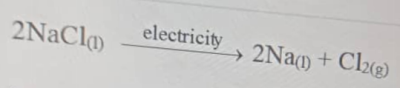
Sodium in the above reaction is produced by
Attached Figure / Diagram
A
Browning process
B
Chlor process
C
Downs process
D
Bosch process
medium Difficulty
Verified Correct Answer: Option C
Chemical Principles & Mechanism
The production of sodium metal and chlorine gas from molten sodium chloride (NaCl) using electricity is an industrial process known as the Downs process. In this process, molten NaCl undergoes electrolysis in a specialized Downs cell, where the Na⁺ ions are reduced to liquid sodium at the cathode, and Cl⁻ ions are oxidized to chlorine gas at the anode.
A. Browning process: There is no widely recognized industrial process by this name for sodium production.
B. Chlor process: This likely refers to the chlor-alkali process, which is the electrolysis of aqueous sodium chloride (brine) to produce chlorine, hydrogen, and sodium hydroxide (NaOH), not pure sodium metal.
D. Bosch process: The Bosch process (often related to the Haber-Bosch process for ammonia synthesis) is not involved in the production of sodium and chlorine from NaCl.
Source: Myschool Past Questions Archive (Record #74217)
Chemistry
UTME / JAMB 2025
Matter & Separation Techniques
Solution
The use of CFCs as a blowing agent has application in
A
foam industry
B
tyre industry
C
refrigerant
D
propellant
medium Difficulty
Verified Correct Answer: Option A
Chemical Principles & Mechanism
Chlorofluorocarbons (CFCs) were widely used as blowing agents for foams and packing materials due to their stability and non-toxicity. They help create bubbles or cavities in the foams, giving them their lightweight and insulating properties.
B. tyre industry: CFCs were not used as blowing agents in the tyre industry; they were primarily associated with foam production and other applications.
C. refrigerant: While CFCs (like Freon) were widely used as refrigerants, the question specifically asks about their application as a blowing agent.
D. propellant: CFCs were also used as propellants in aerosol sprays, but the primary application for a blowing agent is in the foam industry.
The correct answer is option A - foam industry.
Source: Myschool Past Questions Archive (Record #74218)
Chemistry
UTME / JAMB 2025
Acids, Bases, and Salts
Solution
The metal that will liberate H\(_2\) gas from dilute HNO\(_3\) is
A
Cu
B
Mg
C
Ca
D
Zn
medium Difficulty
Verified Correct Answer: Option B
Chemical Principles & Mechanism
Most metals do not liberate hydrogen gas when reacting with nitric acid (HNO₃) because nitric acid is a strong oxidizing agent and oxidizes the produced hydrogen gas to water. However, highly reactive metals like Magnesium (Mg) and manganese (Mn) are exceptions. They react with very dilute and cold nitric acid to produce hydrogen gas.
The reaction with magnesium is: Mg\(_{(s)}\) + 2HNO\(_3\)(aq, very dilute) → Mg(NO\(_3\))\(_2\)\(_{(aq)}\) + H\(_2\)\(_{(g)}\)
A. Cu (Copper) is below hydrogen in the metal reactivity series and cannot displace hydrogen from any dilute acid, including dilute HNO₃.
C. Ca (Calcium) is a reactive metal and would likely behave similarly to magnesium with very dilute nitric acid, potentially liberating hydrogen. However, Mg is the most widely cited and confirmed answer for this specific question in the provided sources, often alongside Manganese.
D. Zn (Zinc) reacts with dilute nitric acid, but typically produces oxides of nitrogen (like N\(_2\)O or NO), not hydrogen gas (except possibly under extremely specific, very dilute and cold conditions which are less commonly referenced than Mg).
Source: Myschool Past Questions Archive (Record #74219)
Chemistry
UTME / JAMB 2025
Atomic Structure and Periodic Table
Diagram
Solution
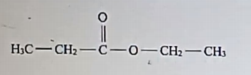
The IUPAC nomenclature of the compound above is
Attached Figure / Diagram
A
propyl ethanoate
B
ethyl ethanoate
C
ethyl propanoate
D
propyl methanoate
medium Difficulty
Verified Correct Answer: Option C
Chemical Principles & Mechanism
The compound CH\(_3\)CH\(_2\)COOCH\(_2\)CH\(_3\) is an ester. The IUPAC naming for esters follows the format alkyl alkanoate.
The alkyl portion comes from the alcohol-derived part (the carbon chain attached to the single-bonded oxygen, −O−CH\(_2\)CH\(_3\)), which has two carbon atoms, making it an ethyl group.
The alkanoate portion comes from the carboxylic acid-derived part (the carbon chain including the carbonyl group,CH\(_3\)CH\(_2\)COO−), which has three carbon atoms (eth- plus a methyl group), making it a propanoate group (from propanoic acid).
Combining these parts gives the name ethyl propanoate. - option C
Source: Myschool Past Questions Archive (Record #74205)
Chemistry
UTME / JAMB 2025
Stoichiometry & Mole Concept
Solution
If 5g of Iron filling was reacted with excess dilute H\(_2\)SO\(_4\) to evolve hydrogen gas, which came to completion after 10 min, calculate the rate of reaction in g/hr.
A
5
B
30
C
20
D
10
medium Difficulty
Verified Correct Answer: Option B
Chemical Principles & Mechanism
Given :
Mass of Iron reacted, m = 5g
time taken, t = 10 mins
However, we must convert the time from mins to hour because of the examiner's demand.
Thus, t = \(\frac{10}{60}\) hr = 0.167
Rate of reaction = \(\frac{mass of reacted iron}{time taken}\)
= \(\frac{5}{0.167}\)
= 29.94
= 30 g/hr
The correct answer is option B.
Source: Myschool Past Questions Archive (Record #74206)
Chemistry
UTME / JAMB 2025
Stoichiometry & Mole Concept
Solution
The evaluation of petrol from crude oil before it is put on sale is to prevent
A
pinking
B
reforming
C
pyrolysis
D
cracking
medium Difficulty
Verified Correct Answer: Option A
Chemical Principles & Mechanism
Evaluating petrol from crude oil prevents issues like engine knocking, which is also known as pinking, ensures proper volatility for starting, controls harmful sulphur content, and maintains desired octane ratings, all crucial for engine performance, efficiency, and environmental compliance, ensuring it meets specific standards before sale. Pinking (Pre-ignition) is the process whereby straight-chain alkanes (like heptane) in raw petrol ignite too early under compression, causing engine knocking (pinking).
Reforming: This process improves quality by rearranging molecules into branched alkanes and aromatics (like iso-octane), raising the octane rating and preventing pinking.
Cracking: Breaks large, heavy hydrocarbons (from heavier fractions) into smaller, more valuable gasoline-range molecules, increasing the quantity of petrol, but the resulting mix might still need reforming.
Pyrolysis: An extreme thermal cracking (high heat) that produces basic petrochemical building blocks (like ethylene, propylene) for plastics, not finished petrol, and is energy-intensive.
Source: Myschool Past Questions Archive (Record #74207)
Chemistry
UTME / JAMB 2025
Matter & Separation Techniques
Solution
The metal used as a packaging material is
A
Al
B
Cu
C
Fe
D
Na
medium Difficulty
Verified Correct Answer: Option A
Chemical Principles & Mechanism
Aluminum (Al) is widely used as a packaging material, especially in the form of foil, cans (for beverages and food), and as a layer in laminated packaging, due to its low cost, malleability, and excellent barrier properties against light, moisture, and oxygen. It also forms a protective oxide layer that prevents corrosion.
Cu (Copper): Copper is not typically used for food packaging due to its reactivity and potential to leach into food, which can be harmful.
Fe (Iron): Iron is the primary component of steel used in cans (often as tinplate or tin-free steel), but it is usually coated to prevent rust and interactions with food. Aluminum (Al) is more commonly and widely used for flexible packaging like foils and for many beverage cans without needing extensive internal coatings.
Na (Sodium): Sodium is a highly reactive alkali metal that reacts violently with water and is unsuitable and dangerous for use as a packaging material.
Source: Myschool Past Questions Archive (Record #74208)
Chemistry
UTME / JAMB 2025
Stoichiometry & Mole Concept
Diagram
Solution
The expression above represents
Attached Figure / Diagram

A
Avogadro's law
B
Boyle's law
C
General gas law
D
Charles' law
medium Difficulty
Verified Correct Answer: Option C
Chemical Principles & Mechanism
The general gas law equation, often called the Ideal Gas Law, is PV = nRT, describing the relationship between a gas's Pressure (P), Volume (V), amount in mole(n), Ideal gas constant(R), and Temperature (T), relating all four key properties in one formula. A related form, the combined law, for a fixed mass of gas is (P₁V₁)/T₁ = (P₂V₂)/T₂, used to find changes in one variable when others change. However, the equation given in the question will give PV = nRT, on rearrangement.
Source: Myschool Past Questions Archive (Record #74209)
Chemistry
UTME / JAMB 2025
Stoichiometry & Mole Concept
Solution
The relative molecular mass of an alkanoic acid with the empirical formula of CH\(_2\)O is
[ H = 1, C = 12, O = 16 ]
A
46
B
88
C
60
D
72
medium Difficulty
Verified Correct Answer: Option C
Chemical Principles & Mechanism
An alkanoic acid is a type of saturated carboxylic acid with the general molecular formula C\(_n\)H\(_{2n}\)O\(_2\).
Given: empirical formula is CH\(_2\)O.
Recall, (Empirical formula) x = Relative molecular mass, since the molecular formula is a whole-number multiple of the empirical formula, (CH\(_2\)O)?, which expands to C\(_x\)H\(_{2x}\)O\(_x\).
Equating the general formula for an alkanoic acid to the derived empirical formula general form, we find x = 2 for the oxygen atoms. Thus, the molecular formula is C\(_2\)H\(_4\)O\(_2\). i.e C\(_n\)H\(_{2n}\)O\(_2\) = C\(_x\)H\(_{2x}\)O\(_x\)
The relative molecular mass with the empirical formula CH\(_2\)O can be calculated using the following expression:
Relative Molecular Mass = (2\timesC) + (4\timesH) + (2\timesO)
Substituting the values:
Relative Molecular Mass = (2 x12) + (4 x 1) + (2 x16)
= 60
Relative Molecular Mass=24+4+32Relative Molecular Mass equals 24 plus 4 plus 32
Relative Molecular Mass=24+4+32
Source: Myschool Past Questions Archive (Record #74221)
Chemistry
UTME / JAMB 2025
Matter & Separation Techniques
Solution
Calculate the time required to liberate 9g of Aluminium metal, when a current of 18A is passed through it.
(1F = 96500C , Al = 27)
A
1769.17 minutes
B
89.34 minutes
C
5360.58 minutes
D
29.48 minutes
medium Difficulty
Verified Correct Answer: Option B
Chemical Principles & Mechanism
Al\(^{3+}\) + 3e\(^-\) → Al
3e\(^-\) = 3F
3 F produced 27g of Al
3 x 96,500C produced 27g Al
(18 x t) C will produce 9g Al (Recall that Q = I x t)
By simple proportion,
\(\frac{3 x 96500}{18t}\) = \(\frac{27}{9}\)
t = \(\frac{9 x 3 x 96500}{18 x 27}\)
t = 5,361.11 seconds
Since the option is in minutes, we have to convert 5,361 seconds to minutes by dividing by 60 (60 sec = 1 min)
t = \(\frac{5361}{60}\)
t = 89.35 minutes
The correct answer is option B.
Source: Myschool Past Questions Archive (Record #74249)
Chemistry
UTME / JAMB 2025
Stoichiometry & Mole Concept
Solution
What is the function of concentrated H\(_2\)SO\(_4\)?
A
It reacts with metals to give a salt and hydro gas
B
It is a dehydrating agent
C
It neutralizes alkali
D
It produces a cryolite precipitate with basic solution
medium Difficulty
Verified Correct Answer: Option B
Chemical Principles & Mechanism
Concentrated sulfuric acid (H\(_2\)SO\(_4\)) has a very strong affinity for water and readily absorbs water molecules from other substances or chemical reactions, thus acting as a powerful dehydrating agent. This property is notably demonstrated in the "charring of sugar" experiment, where it removes the water from sucrose (C\(_{12}\)H\(_{22}\)O\(_{11}\)), leaving behind a column of black carbon. In many organic synthesis reactions, it is used to remove water.
A. It reacts with metals to give a salt and hydro gas: While dilute sulphuric acid reacts with reactive metals (like zinc or iron) to produce hydrogen gas, concentrated sulphuric acid is a strong oxidizing agent and reacts differently, often producing sulphur dioxide gas instead of hydrogen.
C. It neutralizes alkali: Concentrated sulphuric acid is a very strong acid and, like all acids, it reacts with alkalis (soluble bases) in a neutralization reaction to form a salt and water. However, its primary function is not limited to this and its prominent characteristic function, as listed in the options, is its dehydrating property.
D. It produces a cryolite precipitate with basic solution: This statement is incorrect. Sulphuric acid does not produce a cryolite precipitate (cryolite is a mineral, sodium hexafluoroaluminate, Na\(_3\)AlF\(_6\)) with basic solutions.
Source: Myschool Past Questions Archive (Record #74250)