Question Library

Browse, filter, and study verified past examination questions with step-by-step mathematical reasoning.
Launch Interactive Practice
Searching 18,000+ Questions... Sifting topics, KaTeX formulas & verified solutions
Showing 25546–25560 of 29811 verified questions
Sort by:
Biology UTME / JAMB 1990 Excretion & Homeostasis
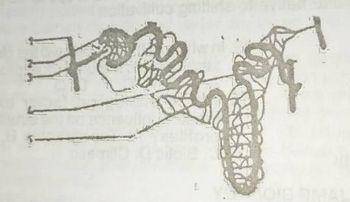
If the blood is too concentrated, more water is absorbed from?
Attached Figure / Diagram
Question diagram
A
5
B
4
C
3
D
1
medium Difficulty
Biology UTME / JAMB 1990 Nervous, Hormonal Coordination & Sense Organs
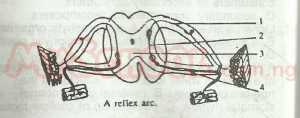
All the cell bodies in the spinal cord are found in
Attached Figure / Diagram
Question diagram
A
1
B
2
C
3
D
4
medium Difficulty
Biology UTME / JAMB 1990 Nervous, Hormonal Coordination & Sense Organs
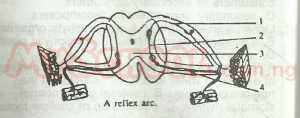
In a reflex action, impulse flows from
Attached Figure / Diagram
Question diagram
A
1 to 2
B
2 to 1
C
4 to 1
D
4 to 2
medium Difficulty
Biology WAEC / WASSCE 1990 Variety of Organisms & Classification of Living Things
Which of the following methods of reproduction is common to Paramecium and Amoeba?
A
Conjugation
B
Sexual reproduction
C
Binary fission
D
Budding
E
Fragmentation
medium Difficulty
Biology WAEC / WASSCE 1990 Cell Structure, Organization & Cell Division
Which of the following structures controls the activities of the living cell?
A
Nucleus
B
Centrosome
C
Chloroplast
D
Golgi body
E
Mitochondrion
medium Difficulty
Biology WAEC / WASSCE 1990 Cell Structure, Organization & Cell Division
Most of the energy in the cell is produced in the
A
mitochondrion
B
lysosome
C
plastid
D
Golgi apparatus
E
cytoplasm
medium Difficulty
Biology WAEC / WASSCE 1990 Variety of Organisms & Classification of Living Things
The structure in the cell that controls the movement of substances in and out of the cell is the
A
cytoplasmic membrane
B
nuclear membrane
C
cytoplasm
D
protoplasm
E
endoplasm
medium Difficulty
Biology WAEC / WASSCE 1990 Cell Structure, Organization & Cell Division
Which of the following structures differentiates an animal cell from a plant cell?
A
Ribosomes
B
Cell membrane
C
Chloroplast
D
Mitochondrion
E
Lysosome
medium Difficulty
Biology WAEC / WASSCE 1990 Cell Structure, Organization & Cell Division
At the end of mitosis the number of cells produced from a parent cell is
A
four
B
six
C
eight
D
three
E
two
medium Difficulty
Biology WAEC / WASSCE 1990 Cell & Its Environment (Diffusion, Osmosis & Transport)
Which of the following statements is not correct of respiration?
A
Gaseous exchange occurs by diffusion
B
Oxygen combines with haemoglobin at the respiratory surface
C
Carbondioxide produced in the tissues is removed by the process of osmosis
D
There are no special organs for respiration in plants
E
In higher animals, respiratory gases are transported in solution.
medium Difficulty
Biology WAEC / WASSCE 1990 Respiration & Gaseous Exchange
Gaseous exchange takes place in the adult toad through the
A
buccal cavity, bladder and lungs
B
buccal cavity, skin and lungs
C
tympanic membrane, lungs and gills
D
buccal cavity, skin and spiracle
E
gills skin and buccal cavity
medium Difficulty
Biology WAEC / WASSCE 1990 Respiration & Gaseous Exchange
Breathing movement in mammals is accompanied by regular movements of the diaphragm and the
A
intercostal muscles
B
vertebral column
C
clavicle
D
pleural cavity
E
floating ribs
medium Difficulty
Biology WAEC / WASSCE 1990 Nutrition in Plants & Animals (Photosynthesis & Food Substances)
Which of the following are components of glomerular filtrate?
A
All the components of Blood except mineral salts
B
Water and salt only
C
All the components of blood except plasma protein and cells
D
Plasma proteins, red and white blood cells
E
Blood cells, amino acid, salts and nitrogenous wastes.
medium Difficulty
Biology WAEC / WASSCE 1990 Cell & Its Environment (Diffusion, Osmosis & Transport)
The mechanism by which useful materials in the glomerular filtrate are taken back into the blood is known as
A
filtration
B
reabsorption
C
haemolysis
D
osmosis
E
dialysis
medium Difficulty
Biology WAEC / WASSCE 1990 Digestive System & Feeding Mechanisms
Which of the following takes place during the process of detoxication in the liver?
A
Poisonous substances in the body are converted into harmless substances
B
Fats and oils are broken into finer particles through emulsification
C
Excess glucose in the blood are converted into glycogen and stored
D
Worn- out red blood cells are broken down
E
Enough heat is generated to sustain the activities of the liver
medium Difficulty
Page 1704 of 1988