Question Library

Browse, filter, and study verified past examination questions with step-by-step mathematical reasoning.

Launch Interactive Practice
Searching 18,000+ Questions... Sifting topics, KaTeX formulas & verified solutions
Showing 23506–23520 of 29811 verified questions
Sort by:
Chemistry UTME / JAMB 1993 Chemical Bonding & Intermolecular Forces
The carbon atoms on ethane are?
A
sp2 hybridized
B
sp3 hybridized
C
sp2d hybridized
D
sp hybridized
medium Difficulty
Chemistry UTME / JAMB 1993 Organic Chemistry II: Functional Groups, Polymers & Biomolecules
Palm wine turns sour with time because?
A
the sugar content is converted into alcohol
B
the carbon (IV) oxide formed during the fermentation process has a sour taste
C
it is commonly adulterated by the tappers and sellers
D
microbial activity results in the production of orgain acids within it
medium Difficulty
Chemistry UTME / JAMB 1993 Organic Chemistry I: Hydrocarbons & Crude Oil
Catalytic hydrogenation of benzene produces?
A
an aromatic hydrocarbon
B
margarine
C
cyclohexane
D
D.D.T
medium Difficulty
Chemistry UTME / JAMB 1993 Organic Chemistry II: Functional Groups, Polymers & Biomolecules
Which of the following represents saponification?
A
Reaction of carboxylic acids with sodium hydroxide
B
Reaction of alkanoates with acid
C
Reaction of alkanoates with alcohols
D
Reaction of alkanoates with sodium hydroxide
medium Difficulty
Chemistry UTME / JAMB 1993 Organic Chemistry II: Functional Groups, Polymers & Biomolecules
The confirmatory test for alkanoic acids in organic qualitative analysis is the?
A
turning of wet blue litmus paper red
B
reaction with alkanols to form esters
C
reaction with sodium hydroxide to form salt and water
D
reaction with aqueous Na2COsp3 to liberate a gas which turns lime water milky
medium Difficulty
Chemistry UTME / JAMB 1993 Oxidation, Reduction & Redox Reactions
A gas that will turn orange potassium heptaoxodichromate (lV) solution to clear green is?
A
sulphur (ii) oxide
B
hydrogen sulphide
C
sulphide (lV) oxide
D
hydrogen chloride
medium Difficulty
Chemistry UTME / JAMB 1993 Kinetic Theory of Matter & Gas Laws
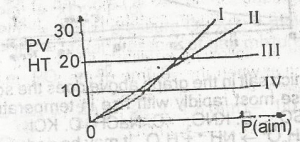
Which of the curves above represents the behaviour of 1 mole of an ideal gas?
Attached Figure / Diagram
Question diagram
A
l
B
ll
C
lll
D
lV
medium Difficulty
Chemistry UTME / JAMB 1993 Water, Solutions & Solubility
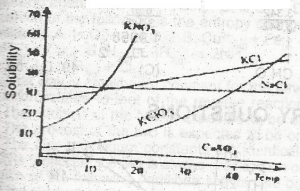
For which salt in the graph above does the solubility increase most rapidly with rise in temperature?
Attached Figure / Diagram
Question diagram
A
CaSO4
B
KNO3
C
NaCl
D
KCl
medium Difficulty
Chemistry UTME / JAMB 1993 Oxidation, Reduction & Redox Reactions
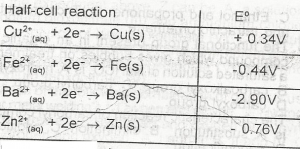
Half-cell reaction. From the data above , it can be deduced that the most powerful reducing agent of the four metals is
Attached Figure / Diagram
Question diagram
A
Cu
B
Fe
C
Ba
D
Zn
medium Difficulty
Chemistry UTME / JAMB 1993 Chemical Energetics & Thermochemistry
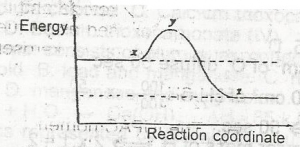
In the diagram above, curve X represents the energy profile for a homogeneous gaseous reaction. Which of the following conditions would produce curve Y for the same reaction?
Attached Figure / Diagram
Question diagram
A
Increase in temperature
B
Increase in the concentration of a reactant
C
Addition of a catalyst
D
Increase in pressure
medium Difficulty
Chemistry UTME / JAMB 1993 Organic Chemistry II: Functional Groups, Polymers & Biomolecules
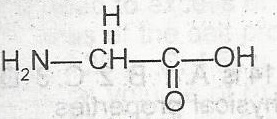
The two functional groups in the above compound are
Attached Figure / Diagram
Question diagram
A
alcohol and amine
B
acid and amine
C
aldehyde and acid
D
ketone and amine
medium Difficulty
Chemistry UTME / JAMB 1993 Stoichiometry, Mole Concept & Volumetric Analysis
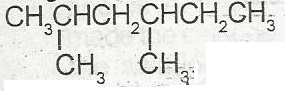
The IUPAC nomenclature for the compound above is
Attached Figure / Diagram
Question diagram
A
dimethlhexane
B
3,5 dimethylhexane
C
1.1 dmethyl, 3 methylpentane
D
2.4 dimethylhexane
medium Difficulty
Chemistry UTME / JAMB 1993 Organic Chemistry I: Hydrocarbons & Crude Oil
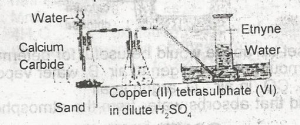
The function of the copper (ll)tetraoxosulphate (IV) in dilute H2SO4 in the figure above is to
Attached Figure / Diagram
Question diagram
A
dry the gas
B
absorb phosphine impurity
C
absorb ethene impurity
D
from an acetylide with ethyne
medium Difficulty
Chemistry UTME / JAMB 1993 Stoichiometry, Mole Concept & Volumetric Analysis
At 25oC and 1atm, a gas occupies a volume of 1.50dm3. What volume will it occupy at 100oC and 1atm?
A
1.88 dm3
B
6.00 dm3
C
18.80 dm3
D
18.80 dm3
E
60.00dm3
medium Difficulty
Chemistry WAEC / WASSCE 1993 Stoichiometry, Mole Concept & Volumetric Analysis
A solution containing 0.095 mol. dm\(^{-3}\) of trioxonitrate (V) acid. Solution B contains 13.50g of X\(_2\)CO\(_3\).10H\(_2\)O per dm\(^3\) (a) Put A in the burette and titrate with 20cm\(^3\) or 25cm\(^3\) portions of B using methyl orange as an indicator. Record the volume of your pipette. Tabulate your burette readings and calculate the average volume of A used. (b) From your results and the information provided, calculate the; (i) Concentration of B in mol. dm\(^3\) (ii) molar mass of X\(_2\)CO\(_3\).10H\(_2\)O (iii) percentage by mass of X in X\(_2\)CO\(_3\).10H\(_3\)O. The equation for the reaction is X\(_2\)CO\(_3\) + 2HNO\(_3{(aq)}\) \(\to\) 2XNO\(_{3(aq)}\) + CO\(_{2(g)}\) + 11H\(_2\)O\(_{(l)}\) [H = 1, C = 12, O = 16] (c) Give the reason for the following: (i) using just a small quantity of the indicator during acid-base titrations. (ii) obtaining at least two sets of readings for titration experiment.
A
lead and tin
B
iron and carbon
C
copper and tin
D
aluminium and copper
E
lead and antimony
medium Difficulty
Page 1568 of 1988