Question Library

Browse, filter, and study verified past examination questions with step-by-step mathematical reasoning.

Launch Interactive Practice
Searching 18,000+ Questions... Sifting topics, KaTeX formulas & verified solutions
Showing 22336–22350 of 29811 verified questions
Sort by:
Biology UTME / JAMB 1995 Cell Structure, Organization & Cell Division
Which of the following organelles are likely to be present in cells that are actively respiring and photosynthesizing?
A
Nucleolus and centrioles
B
Mitochondria and chloroplast
C
Lysosomes and ribosomes
D
Golgi apparatus and endoplasmic reticulum
medium Difficulty
Biology UTME / JAMB 1995 Variety of Organisms & Classification of Living Things
One common characteristic of fungi, algae, mosses and ferns is that they
A
show alternation of generations
B
reproduce sexually by conjugation
C
produce spores that are dispersed
D
possess chlorophyll in their tissues
medium Difficulty
Biology UTME / JAMB 1995 Nutrition in Plants & Animals (Photosynthesis & Food Substances)
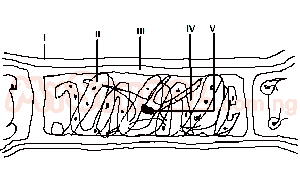
Protein-like bodies are borne on the part labelled
Attached Figure / Diagram
Question diagram
A
II
B
III
C
IV
D
V
medium Difficulty
Biology UTME / JAMB 1995 Variety of Organisms & Classification of Living Things
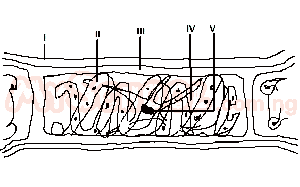
The sexual reproductive function is performed by the part labelled
Attached Figure / Diagram
Question diagram
A
I
B
II
C
IV
D
V
medium Difficulty
Biology UTME / JAMB 1995 Growth, Micro-organisms & Public Health
Which of the following is transmitted through mosquito bite?
A
Filariasis
B
Typhus
C
Plague
D
Schistosomiasis
medium Difficulty
Biology UTME / JAMB 1995 Adaptation & Evolution
Which of the following insects lays its eggs in horny, purse-like cases?
A
Mosquito
B
Butterfly
C
Termite
D
Cockroach
medium Difficulty
Biology UTME / JAMB 1995 Supporting Tissues & Skeletal System
Which of the following vertebrates does the skin function as a respiratory surface?
A
Rat
B
Lizard
C
Fish
D
Frog
medium Difficulty
Biology UTME / JAMB 1995 Transport System in Plants & Animals
Birds maintain their body temperature with the help of their
A
blood which maintains constant temperature
B
feathers which cover the body
C
skin which conserves moisture
D
veins which transport fluid of constant temperature to all body tissues
medium Difficulty
Biology UTME / JAMB 1995 Transport System in Plants & Animals
Which of following is NOT involved in the transport of substance in the body?
A
Lymph
B
Plasma
C
Leucocytes
D
Erythrocytes
medium Difficulty
Biology UTME / JAMB 1995 Respiration & Gaseous Exchange
The end product of glycolysis in plants and animals is
A
pyruvic acid
B
citric acid
C
aspartic acid
D
malic acid
medium Difficulty
Biology UTME / JAMB 1995 Respiration & Gaseous Exchange
During respiration, air circulates round plant tissues via the
A
lenticels
B
stomata
C
guard cells
D
intercellular spaces
medium Difficulty
Biology UTME / JAMB 1995 Excretion & Homeostasis
The excretory structure in the earthworm is the
A
malpighian tubule
B
flame cell
C
nephridium
D
kidney
medium Difficulty
Biology UTME / JAMB 1995 Supporting Tissues & Skeletal System
During the bending of the arm, the biceps muscles
A
contracts and the triceps muscles relaxes
B
relaxes and the triceps muscles contracts
C
and the triceps muscles contract
D
and the triceps muscles relax
medium Difficulty
Biology UTME / JAMB 1995 Variety of Organisms & Classification of Living Things
Biological growth refers strictly to an increase in the
A
protoplasm of an organism
B
number of organisms
C
size of an organism
D
development of form
medium Difficulty
Biology UTME / JAMB 1995 Nervous, Hormonal Coordination & Sense Organs
The process of walking is under the control of the part of the brain called
A
optic lobe
B
olfactory lobe
C
cerebellum
D
medulla oblongata
medium Difficulty
Page 1490 of 1988