Question Library

Browse, filter, and study verified past examination questions with step-by-step mathematical reasoning.

Launch Interactive Practice
Searching 18,000+ Questions... Sifting topics, KaTeX formulas & verified solutions
Showing 17911–17925 of 29811 verified questions
Sort by:
Biology WAEC / WASSCE 2002 Reproduction in Plants & Animals
In flowering plants, fertilization would occur when
A
the pollen grows downwards penetrating the style
B
a pollen grain is transferred to the stigma
C
one of the nuclei inside the pollen tube fuses with the ovum
D
the nucleus of the pollen tube divides
medium Difficulty
Biology WAEC / WASSCE 2002 Reproduction in Plants & Animals
After fertilization in the flowering plants, the zygote develops into the
A
plumule
B
radicle
C
cotyledon
D
embryo
medium Difficulty
Biology WAEC / WASSCE 2002 Basic Ecological Concepts, Ecosystems & Biomes
Which of the following processes removes water from the water cycle?
A
Condensation
B
Perspiration
C
Photosynthesis
D
Transpiration
medium Difficulty
Biology WAEC / WASSCE 2002 Digestive System & Feeding Mechanisms
The importance of practising crop-rotation in agriculture is to
A
control soil erosion
B
maintain the fertility of the soil
C
improve the nutritional value of crops
D
ensure growth of cash crops
medium Difficulty
Biology WAEC / WASSCE 2002 Basic Ecological Concepts, Ecosystems & Biomes
In any food chain, the first member must be a
A
carnivore
B
herbivore
C
zooplankton
D
autotroph
medium Difficulty
Biology WAEC / WASSCE 2002 Basic Ecological Concepts, Ecosystems & Biomes
Which of the following measures is most likely to cause a damage to the ecosystem in the control of pests and weeds?
A
Use of ladybird insects to feed on aphids
B
introduction of bacterium to kill larvae of butterfly
C
Introduction of Tilapia fish in ponds to feed on mosquito larvae
D
Spraying insecticides to destroy cotton- stainers in a cotton-field
medium Difficulty
Biology WAEC / WASSCE 2002 Basic Ecological Concepts, Ecosystems & Biomes
The total amount of energy entering a food chain is that which is present in the
A
consumer
B
ecosystem
C
producer
D
decomposer
medium Difficulty
Biology WAEC / WASSCE 2002 Adaptation & Evolution
Which of the following terms ensures the survival of an organism in its environment?
A
Hibernation
B
Succession
C
Adaptation
D
Competition
medium Difficulty
Biology WAEC / WASSCE 2002 Variety of Organisms & Classification of Living Things
The concave shape of a birds wing during flight, ensures that the greater air pressure under the wings will
A
counteract the effect of gravity
B
lift the bird so that it can remain airborne
C
enable the pectoral ,muscles to contract easily
D
change the direction of the flying bird
medium Difficulty
Biology WAEC / WASSCE 2002 Basic Ecological Concepts, Ecosystems & Biomes
The possession of breathing roots is a characteristic of plants growing in
A
mangrove swamp
B
coastal savanna
C
guinea savanna
D
shrub biome
medium Difficulty
Biology WAEC / WASSCE 2002 Variety of Organisms & Classification of Living Things
The numbers in a population would rise, if there was an increase in the
A
spread of disease
B
number of deaths
C
number of predators
D
amount of food available
medium Difficulty
Biology WAEC / WASSCE 2002 Growth, Micro-organisms & Public Health
Measles in infants can be prevented by
A
sleeping under mosquito nets
B
providing clean water supply
C
taking anti-malaria tablets
D
vaccinating young children
medium Difficulty
Biology WAEC / WASSCE 2002 Cell Structure, Organization & Cell Division
Which of the following substances is contained in chloroplasts?
A
Starch
B
Sugar
C
Glycogen
D
Dextrin
medium Difficulty
Biology WAEC / WASSCE 2002 Variety of Organisms & Classification of Living Things
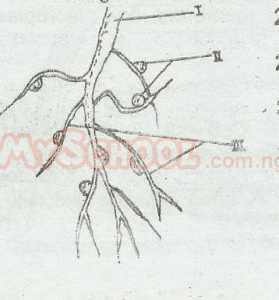
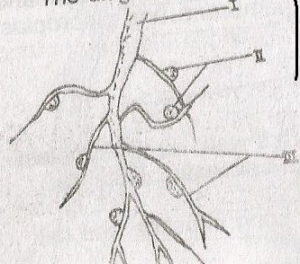
The structures labelled II are
Attached Figure / Diagram
Question diagram
A
groundnut seeds
B
underground root nuts
C
root Tubers
D
root nodules
medium Difficulty
Biology WAEC / WASSCE 2002 Basic Ecological Concepts, Ecosystems & Biomes
The structures labelled II are associated with
Attached Figure / Diagram
Question diagram
A
storage of plant nutrients
B
organic acids
C
nitrogen-fixing bacteria
D
putrefying microbes
medium Difficulty
Page 1195 of 1988