Question Library
Browse, filter, and study verified past examination questions with step-by-step mathematical reasoning.
Searching 18,000+ Questions...
Sifting topics, KaTeX formulas & verified solutions
Showing 406–420 of 14883 verified questions
Sort by:
Chemistry
UTME / JAMB 2025
Stoichiometry & Mole Concept
Solution
C\(_2\)H\(_5\)OH + CH\(_3\)COOH ⇌ CH\(_3\)COOC\(_2\)H\(_5\) + H\(_2\)O
The reaction above is
A
condensation
B
fermentation
C
esterification
D
hydrolysis
medium Difficulty
Verified Correct Answer: Option C
Chemical Principles & Mechanism
The reaction provided shows ethanol (\(\text{C}_{2}\text{H}_{5}\text{OH}\), an alcohol) reacting with ethanoic acid (\(\text{CH}_{3}\text{COOH}\), a carboxylic acid) to produce ethyl ethanoate (\(\text{CH}_{3}\text{COOC}_{2}\text{H}_{5}\), an ester) and water (\(\text{H}_{2}\text{O}\)). The formation of an ester and water from an alcohol and a carboxylic acid is defined as an esterification reaction. This is also a type of condensation reaction, where two molecules combine to form a larger one, eliminating a small molecule (water) in the process.
A. condensation: While esterification is a type of condensation reaction, "esterification" is the specific name for the reaction forming an ester.
B. fermentation: Fermentation is the process of breaking down organic molecules, such as glucose into ethanol and carbon dioxide, in the absence of oxygen, usually with microorganisms. It is not the process shown in the reaction.
D. hydrolysis: Hydrolysis is the reverse reaction, where an ester breaks down into a carboxylic acid and an alcohol by reacting with water.
The correct answer is option C - Esterification
Source: Myschool Past Questions Archive (Record #74178)
Chemistry
UTME / JAMB 2025
Stoichiometry & Mole Concept
Solution
CH\(_3\) - CH\(_2\) - COOCH\(_2\) - CH\(_3\)
From the condensed structure above, the reactants are
A
ethanol and ethanoic acid
B
propanol and propanoic acid
C
propanol and ethanoic acid
D
propanoic acid and ethanol
medium Difficulty
Verified Correct Answer: Option D
Chemical Principles & Mechanism
To identify the specific acid and alcohol reactants, we can reverse this process by adding water back to the ester molecule: The part with the carbonyl group (\(\text{COO}\)) comes from the carboxylic acid. The \(\text{CH}_{3}\text{CH}_{2}\text{COO}\) part corresponds to propanoic acid (\(\text{CH}_{3}\text{CH}_{2}\text{COOH}\)).The alkyl group attached to the oxygen atom (\(\text{O}\)) comes from the alcohol. The \(\text{CH}_{2}\text{CH}_{3}\) group corresponds to ethanol (\(\text{CH}_{3}\text{CH}_{2}\text{OH}\)). Thus, the reaction that forms ethyl propanoate is between propanoic acid and ethanol.
A. ethanol and ethanoic acid: These reactants would form ethyl ethanoate (\(\text{CH}_{3}\text{COOCH}_{2}\text{CH}_{3}\)), not ethyl propanoate.
B. propanol and propanoic acid: These reactants would form propyl propanoate (\(\text{CH}_{3}\text{CH}_{2}\text{COOCH}_{2}\text{CH}_{2}\text{CH}_{3}\)), which has a three-carbon chain on both sides of the ester link, unlike the given structure.
C. propanol and ethanoic acid: These reactants would form propyl ethanoate (\(\text{CH}_{3}\text{COOCH}_{2}\text{CH}_{2}\text{CH}_{3}\)), which also does not match the given structure.
The correct option is D. propanoic acid and ethanol.
Source: Myschool Past Questions Archive (Record #74179)
Chemistry
UTME / JAMB 2025
Matter & Separation Techniques
Solution
The stainless steel alloy is used for making
A
cutlery
B
permanent magnets
C
rock crushers
D
bridges
medium Difficulty
Verified Correct Answer: Option A
Chemical Principles & Mechanism
Stainless steel is widely used for making cutlery (knives, forks, spoons, and other utensils) due to its excellent properties.
These properties include corrosion resistance (it doesn't rust easily), durability, hygiene, and non-reactive properties that make it safe for contact with food.
B. permanent magnets: Permanent magnets are typically made from specific ferromagnetic alloys like Alnico, not stainless steel. Most common grades of stainless steel (austenitic) are non-magnetic.
C. rock crushers: Rock crushers require extremely hard and wear-resistant materials to withstand the abrasive forces involved. While some specialized, high-strength stainless steel grades might be used in certain industrial contexts, the primary material for heavy-duty rock crushing components is usually manganese steel or other extremely tough alloys designed for high impact and abrasion, not standard stainless steel.
D. bridges: While stainless steel can be used in certain components in bridge building for its corrosion resistance, especially in harsh environments, the primary structural material for most large bridges is typically structural steel (carbon steel) or concrete. The general use for "bridges" is less specific and less common than its use in cutlery manufacturing.
The correct answer is option A - Cutlery
Source: Myschool Past Questions Archive (Record #74180)
Chemistry
UTME / JAMB 2025
Atomic Structure and Periodic Table
Solution
The basicity of C\(_2\)H\(_2\)O\(_4\) is
A
3
B
4
C
2
D
8
medium Difficulty
Verified Correct Answer: Option C
Chemical Principles & Mechanism
Basicity refers to the number of replaceable hydrogen ions (H\(^+\)) an acid molecule can furnish in a solution.
The basicity of oxalic acid (C\(_2\)H\(_2\)O\(_4\)) is 2, meaning it's a dibasic acid because each molecule can donate two protons (H\(^+\)) when ionized in water, forming two replaceable hydrogen atoms and reacting with two moles of hydroxide ions, allowing it to form normal salts like K\(_2\)C\(_2\)O\(_4\).
Source: Myschool Past Questions Archive (Record #74210)
Chemistry
UTME / JAMB 2025
Stoichiometry & Mole Concept
Solution
Enzymatic conversion of glucose to ethanol is
A
polymerization
B
hydrogenation
C
fermentation
D
saponification
medium Difficulty
Verified Correct Answer: Option C
Chemical Principles & Mechanism
The enzymatic conversion of glucose to ethanol is a biochemical process called fermentation, primarily catalyzed by the enzyme complex zymase, found in yeast, breaking down sugar into ethanol and carbon dioxide, crucial for brewing, baking, and biofuels.
The overall chemical equation for the conversion of glucose to ethanol via fermentation is C₆H₁₂O₆ → 2C₂H₅OH + 2CO₂, where one molecule of glucose (C₆H₁₂O₆) breaks down into two molecules of ethanol (C₂H₅OH) and two molecules of carbon dioxide (CO\(_2\)).
Glucose polymerization links many glucose monomers (units) into long chains (polymers) like starch, cellulose, and glycogen, forming essential carbohydrates for energy storage (starch/glycogen) or structure (cellulose).
The hydrogenation of glucose is a catalytic process that adds hydrogen to its carbonyl group, reducing it to a primary alcohol and converting the sugar into sorbitol, a widely used sugar alcohol.
Saponification is the chemical process where fats or oils react with a strong alkali (like sodium or potassium hydroxide) to produce soap (a fatty acid salt) and glycerol.
Source: Myschool Past Questions Archive (Record #74211)
Chemistry
UTME / JAMB 2025
Matter & Separation Techniques
Solution
Gold does not require extraction because it is
A
a precious mineral
B
inert
C
free in nature
D
neutral
medium Difficulty
Verified Correct Answer: Option C
Chemical Principles & Mechanism
Gold does not require complex extraction because it's a noble metal that is highly unreactive (inert), allowing it to be found in its pure, elemental (native) form in nature as nuggets or flakes, rather than locked in compounds, making options B and C correct, but C is the direct reason for not needing extraction from ore.
Therefore, while being precious (A) and neutral (D, technically, as it's an element), the key reason it's found easily is its inert nature (B) and presence as a free element (C).
Source: Myschool Past Questions Archive (Record #74212)
Chemistry
UTME / JAMB 2025
Acids, Bases, and Salts
Solution
The process employed in the industrial preparation of tetraoxosulphate(VI) acid is
A
Contact
B
Bosch
C
Frasch
D
Haber
medium Difficulty
Verified Correct Answer: Option A
Chemical Principles & Mechanism
The Contact Process is the main industrial method for making concentrated sulphuric acid (H\(_2\)SO\(_4\)), involving three steps: burning sulphur to get sulphur dioxide (SO\(_2\)), catalytically oxidizing SO\(_2\) with oxygen to form sulphur trioxide (SO\(_3\)) using a vanadium(V) oxide catalyst, and then absorbing SO\(_3\) into concentrated sulphuric acid to create oleum, which is finally diluted to the desired strength.
The Bosch process is primarily used for the industrial-scale production of hydrogen gas, (H\(_2\)).
The Frasch process is used for producing sulphur.
The Haber process (or Haber-Bosch process) is used to produce ammonia (NH\(_3\)).
Source: Myschool Past Questions Archive (Record #74213)
Chemistry
UTME / JAMB 2025
Atomic Structure and Periodic Table
Solution
The catalytic hydrogenation of benzene produces
A
hexane
B
margarine
C
hexene
D
cyclohexane
medium Difficulty
Verified Correct Answer: Option D
Chemical Principles & Mechanism
Catalytic hydrogenation of benzene (C₆H₆) is a chemical process that requires high temperature, high pressure, and a catalyst (such as nickel or platinum). During this reaction, three molecules of hydrogen (H₂) are added across the three double bonds of the benzene ring, converting the aromatic compound into a saturated cyclic alkane, which is cyclohexane (C₆H₁₂).
Source: Myschool Past Questions Archive (Record #74214)
Chemistry
UTME / JAMB 2025
Stoichiometry & Mole Concept
Solution
A by-product of the alkaline hydrolysis of tristearin is a
A
dihydric alkanol
B
tertiary alkanol
C
secondary alkanol
D
trihydric alkanol
medium Difficulty
Verified Correct Answer: Option D
Chemical Principles & Mechanism
Tristearin is a triglyceride, which is an ester of glycerol and three fatty acid molecules. Alkaline hydrolysis of fats and oils, a process called saponification, yields soap (the salt of the fatty acid) and glycerol. Glycerol, also known as propane-1,2,3-triol, is an alkanol with three hydroxyl (-OH) groups in its structure, making it a trihydric alkanol.
A. dihydric alkanol is incorrect because a dihydric alkanol (e.g., ethane-1,2-diol or glycol) has only two hydroxyl groups, while glycerol produced from the reaction has three.
B. tertiary alkanol and C. secondary alkanol are incorrect because they refer to the position and number of hydrogen atoms attached to the carbon atom bearing the hydroxyl group in monohydric alcohols. The product, glycerol, is a trihydric alkanol.
Source: Myschool Past Questions Archive (Record #74215)
Chemistry
UTME / JAMB 2025
Stoichiometry & Mole Concept
Solution
2SO\(_2\)\(_{(s)}\) + O\(_2\)\(_{(s)}\) ⇌ 2SO\(_3\) ; \DeltaG^\circ = - ve
For the above reaction to be feasible
A
ΔH = + ve ,ΔS = + ve
B
ΔH = 0 ,ΔS = + ve
C
ΔH = + ve ,ΔS = - ve
D
ΔS = 0
medium Difficulty
Verified Correct Answer: Option A
Chemical Principles & Mechanism
For a reaction to be feasible (spontaneous), the change in Gibbs free energy (\DeltaG) must be negative (\DeltaG<0). The Gibbs free energy is related to the enthalpy change (\DeltaH) and entropy change (\DeltaS) by the equation: \DeltaG = \DeltaH −T\DeltaS
In the given reaction, 2SO\(_2\)\(_{(s)}\) + O\(_2\)\(_{(s)}\) ⇌ 2SO\(_3\), there are 3 moles of solid reactants forming 2 moles of solid products. A decrease in the number of moles of solid generally leads to a decrease in entropy, so \DeltaS would be negative. The formation of SO\(_3\) from SO\(_2\) and O\(_2\) is an exothermic reaction, meaning \DeltaH is negative.
When \DeltaH is negative and \DeltaS is negative, the reaction is feasible at low temperatures.
Based on the options provided:
A. \DeltaH = +ve, \DeltaS = +ve; Feasible only at high temperatures.
B. \Delta? = 0, \DeltaS= + ve ; Feasible at all temperatures as \DeltaG would be negative.
C. \DeltaH = +ve , \DeltaS = −ve : This combination always results in a positive \DeltaG, so the reaction is never feasible in the forward direction as written.
D. \DeltaS = 0: Feasible if \DeltaH is negative. The condition which makes any reaction not feasible is a positive \DeltaH and a negative \DeltaS.
If both are positive, low T makes −T\DeltaS negative, so high T favours negative \DeltaG (spontaneous).
Source: Myschool Past Questions Archive (Record #74216)
Chemistry
UTME / JAMB 2025
Electrochemistry and Redox
Diagram
Solution
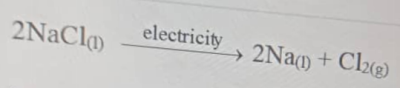
Sodium in the above reaction is produced by
Attached Figure / Diagram
A
Browning process
B
Chlor process
C
Downs process
D
Bosch process
medium Difficulty
Verified Correct Answer: Option C
Chemical Principles & Mechanism
The production of sodium metal and chlorine gas from molten sodium chloride (NaCl) using electricity is an industrial process known as the Downs process. In this process, molten NaCl undergoes electrolysis in a specialized Downs cell, where the Na⁺ ions are reduced to liquid sodium at the cathode, and Cl⁻ ions are oxidized to chlorine gas at the anode.
A. Browning process: There is no widely recognized industrial process by this name for sodium production.
B. Chlor process: This likely refers to the chlor-alkali process, which is the electrolysis of aqueous sodium chloride (brine) to produce chlorine, hydrogen, and sodium hydroxide (NaOH), not pure sodium metal.
D. Bosch process: The Bosch process (often related to the Haber-Bosch process for ammonia synthesis) is not involved in the production of sodium and chlorine from NaCl.
Source: Myschool Past Questions Archive (Record #74217)
Chemistry
UTME / JAMB 2025
Matter & Separation Techniques
Solution
The use of CFCs as a blowing agent has application in
A
foam industry
B
tyre industry
C
refrigerant
D
propellant
medium Difficulty
Verified Correct Answer: Option A
Chemical Principles & Mechanism
Chlorofluorocarbons (CFCs) were widely used as blowing agents for foams and packing materials due to their stability and non-toxicity. They help create bubbles or cavities in the foams, giving them their lightweight and insulating properties.
B. tyre industry: CFCs were not used as blowing agents in the tyre industry; they were primarily associated with foam production and other applications.
C. refrigerant: While CFCs (like Freon) were widely used as refrigerants, the question specifically asks about their application as a blowing agent.
D. propellant: CFCs were also used as propellants in aerosol sprays, but the primary application for a blowing agent is in the foam industry.
The correct answer is option A - foam industry.
Source: Myschool Past Questions Archive (Record #74218)
Chemistry
UTME / JAMB 2025
Acids, Bases, and Salts
Solution
The metal that will liberate H\(_2\) gas from dilute HNO\(_3\) is
A
Cu
B
Mg
C
Ca
D
Zn
medium Difficulty
Verified Correct Answer: Option B
Chemical Principles & Mechanism
Most metals do not liberate hydrogen gas when reacting with nitric acid (HNO₃) because nitric acid is a strong oxidizing agent and oxidizes the produced hydrogen gas to water. However, highly reactive metals like Magnesium (Mg) and manganese (Mn) are exceptions. They react with very dilute and cold nitric acid to produce hydrogen gas.
The reaction with magnesium is: Mg\(_{(s)}\) + 2HNO\(_3\)(aq, very dilute) → Mg(NO\(_3\))\(_2\)\(_{(aq)}\) + H\(_2\)\(_{(g)}\)
A. Cu (Copper) is below hydrogen in the metal reactivity series and cannot displace hydrogen from any dilute acid, including dilute HNO₃.
C. Ca (Calcium) is a reactive metal and would likely behave similarly to magnesium with very dilute nitric acid, potentially liberating hydrogen. However, Mg is the most widely cited and confirmed answer for this specific question in the provided sources, often alongside Manganese.
D. Zn (Zinc) reacts with dilute nitric acid, but typically produces oxides of nitrogen (like N\(_2\)O or NO), not hydrogen gas (except possibly under extremely specific, very dilute and cold conditions which are less commonly referenced than Mg).
Source: Myschool Past Questions Archive (Record #74219)
Chemistry
UTME / JAMB 2025
Atomic Structure and Periodic Table
Diagram
Solution
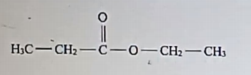
The IUPAC nomenclature of the compound above is
Attached Figure / Diagram
A
propyl ethanoate
B
ethyl ethanoate
C
ethyl propanoate
D
propyl methanoate
medium Difficulty
Verified Correct Answer: Option C
Chemical Principles & Mechanism
The compound CH\(_3\)CH\(_2\)COOCH\(_2\)CH\(_3\) is an ester. The IUPAC naming for esters follows the format alkyl alkanoate.
The alkyl portion comes from the alcohol-derived part (the carbon chain attached to the single-bonded oxygen, −O−CH\(_2\)CH\(_3\)), which has two carbon atoms, making it an ethyl group.
The alkanoate portion comes from the carboxylic acid-derived part (the carbon chain including the carbonyl group,CH\(_3\)CH\(_2\)COO−), which has three carbon atoms (eth- plus a methyl group), making it a propanoate group (from propanoic acid).
Combining these parts gives the name ethyl propanoate. - option C
Source: Myschool Past Questions Archive (Record #74205)
Chemistry
UTME / JAMB 2025
Stoichiometry & Mole Concept
Solution
If 5g of Iron filling was reacted with excess dilute H\(_2\)SO\(_4\) to evolve hydrogen gas, which came to completion after 10 min, calculate the rate of reaction in g/hr.
A
5
B
30
C
20
D
10
medium Difficulty
Verified Correct Answer: Option B
Chemical Principles & Mechanism
Given :
Mass of Iron reacted, m = 5g
time taken, t = 10 mins
However, we must convert the time from mins to hour because of the examiner's demand.
Thus, t = \(\frac{10}{60}\) hr = 0.167
Rate of reaction = \(\frac{mass of reacted iron}{time taken}\)
= \(\frac{5}{0.167}\)
= 29.94
= 30 g/hr
The correct answer is option B.
Source: Myschool Past Questions Archive (Record #74206)